

Captain Spins casino Plinko
Introduction
Plinko has become one of the most discussed instant-win formats in online gambling, and I understand why. On the surface, it looks almost too simple: you choose a stake, set the risk level, drop a ball, and watch it bounce through a field of pegs until it lands in a multiplier slot. But that simplicity is exactly what makes Captain spins casino Plinko worth a closer look. It removes the visual noise of many modern slots and puts the core gambling experience in plain sight: probability, pace, and emotional swing.
When I assess Plinko at Captain spins casino, I do not treat it as a novelty toy or a stripped-down slot. It is a distinct casino game with its own rhythm, its own pressure points, and its own way of shaping player expectations. The interface is clean, the rules are easy to grasp within seconds, yet the actual session can feel very different depending on how the risk setting is configured. That gap between visual simplicity and practical intensity is the main reason Plinko keeps attracting attention.
For Canadian players in particular, this matters because Plinko is often approached with the wrong mindset. Many launch it expecting casual, low-effort entertainment. In reality, the experience can range from steady and repetitive to highly volatile and mentally demanding. The key question is not just how Plinko works, but what that means once real money is involved. That is the angle I focus on in this review.
What Plinko is and why players keep coming back to it
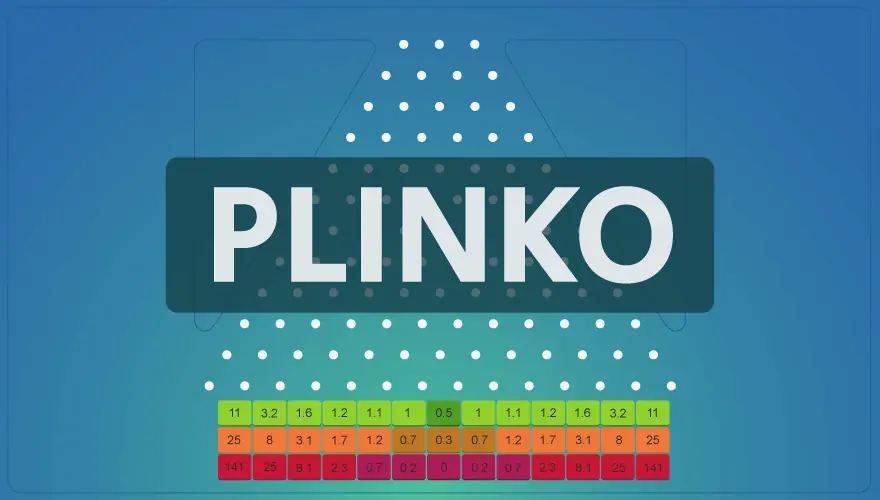
Plinko is a chance-based casino game built around a vertical board filled with evenly spaced pins. A ball drops from the top, collides with the pins on its way down, and eventually lands in one of several payout zones at the bottom. Each zone carries a multiplier. Lower multipliers tend to sit near the center, while the highest ones are usually placed at the far edges, where the ball reaches less often.
The reason this format became so noticeable is straightforward: it turns randomness into something visible. In a slot, the random number generator does its work behind reels, symbols, and animations. In Plinko, the random path is presented almost as a physical event. Players can literally watch the uncertainty unfold bounce by bounce. That creates a stronger sense of involvement, even though the result is still governed by probability rather than skill.
There is another reason Plinko stands out. It delivers instant resolution without forcing the player through Captain Spins Casino bonus and casino rules rounds, paylines, symbol values, or layered rules. You do not need to study a paytable for ten minutes to understand what is happening. Yet the game still leaves room for decision-making through stake size, number of rows in some versions, and most importantly, the risk profile. That balance between accessibility and tension is rare.
One of the more interesting things I have noticed is that Plinko often feels “fairer” to players than many reel-based real money game selection inside Captain Spins Casino, not because the math is softer, but because the route to the result is visible. Seeing the ball drift away from a high multiplier can be frustrating, but it rarely feels mysterious. The game shows you the miss in real time. That transparency is emotionally powerful, even if it does not change the odds.
How the core Plinko mechanic actually works
At a practical level, Plinko is built on repeated binary movement. Every time the ball hits a peg, it is deflected left or right. Over many collisions, these tiny directional changes create a final landing position. The center lanes are usually easier to reach because there are more possible paths leading there. The outermost slots are statistically harder to hit, which is why they can carry much larger multipliers.
In most online versions, including the type of experience players expect from Captain spins casino Plinko, the session begins with a few simple choices:
Select a bet amount.
Choose a risk level, often low, medium, or high.
In some versions, choose the number of rows.
Drop one ball manually or activate autoplay.
That sounds minimal, but each setting changes the feel of the session. The risk level is especially important because it reshapes the payout distribution. A low-risk setup tends to compress results toward smaller multipliers, which can make outcomes more stable but less explosive. A high-risk setup usually widens the distribution, meaning more low-end finishes and rarer but much larger top-end hits.
The row count, where available, matters for a different reason. More rows mean more collisions, which creates a broader spread of possible final positions. In simple terms, the longer the ball travels, the more room there is for the distribution to separate into common and uncommon outcomes. That can make the edge multipliers more dramatic, but it also means the center may still absorb a large share of results.
| Setting | What it changes | What it means in practice |
|---|---|---|
| Bet size | The monetary value of each drop | Directly affects bankroll pressure during fast sessions |
| Risk level | The payout distribution across multiplier slots | Changes whether the session feels steady or swing-heavy |
| Rows | The number of deflections before landing | Can increase spread and alter how often edge outcomes appear |
| Autoplay | The speed and continuity of repeated drops | Makes it easier to burn through balance without noticing |
What matters most is this: the ball’s movement looks physical, but the experience is still designed around digital probability. The visual path gives the game personality, yet the long-term outcome is determined by the same mathematical principles that govern other RNG-based casino products. Players should enjoy the presentation, but not confuse it with control.
Why the game feels engaging and how the pace affects real sessions
Plinko creates engagement through short cycles and constant anticipation. Every round resolves quickly, but not instantly. There is a brief suspense window while the ball bounces downward, and that tiny delay is enough to build emotional investment. You are not waiting through a full spin animation, but you are also not getting a sterile instant result. It sits in a very effective middle ground.
This pacing has a direct effect on bankroll management. Because each round is short and the interface is uncomplicated, players can launch a large number of drops in a short period. That makes Plinko feel light, but the financial tempo can be surprisingly aggressive. A game does not need loud graphics or bonus buys to drain a balance quickly; a clean interface and rapid repetition can do the same job more quietly.
That is one of the most important practical truths about Captain spins casino Plinko. The session often feels calmer than it really is. There are fewer distractions than in a video slot, fewer symbols to track, and no story layer. As a result, players may underestimate how much they are staking over ten or fifteen minutes. The simplicity lowers cognitive friction, and lower friction usually means faster decision loops.
I would also highlight a detail many Captain Spins Casino Trustpilot ratings for new players overlook: Plinko can be more mentally absorbing during losing stretches than it first appears. In a slot, a bad run is often broken up by animations, mini-hits, and changing reel layouts. In Plinko, repeated low multipliers arrive in a cleaner, more exposed pattern. That can make the session feel brutally honest, but also psychologically sharper. There is less decoration between the player and the result.
How risky Plinko really is and who tends to enjoy it most
Plinko can range from relatively controlled to highly aggressive depending on the chosen setup. It is not accurate to label the format as either “safe” or “dangerous” without context. The real answer sits in the risk setting and the player’s own behavior. A low-risk mode with modest stakes can produce a measured session. A high-risk mode with fast autoplay can become one of the more volatile experiences in the casino lobby.
Players who usually enjoy direct, numbers-driven formats often respond well to Plinko. It suits people who like seeing the result structure clearly and do not need elaborate themes or bonus narratives. It can also appeal to those who prefer frequent resolution rather than long feature hunts.
On the other hand, it may not suit players who want progression, variety, or a sense of evolving gameplay. Plinko is repetitive by design. The tension comes from distribution and outcome spread, not from unlocking new stages or triggering layered content. If someone enjoys slots for their audiovisual build-up and feature diversity, Plinko may feel too bare after the novelty fades.
In my view, the best fit looks like this:
Players who are comfortable with probability-based outcomes and do not expect skill to influence results.
Players who want quick rounds and clear multiplier logic.
Players who can set firm limits before the session starts.
The weaker fit is just as clear: anyone who chases excitement through constant feature variation, or anyone who tends to increase stakes impulsively after a dry spell, should approach Plinko carefully or choose a slower format.
What players should understand about odds, session variance, and possible outcomes
The biggest misunderstanding around Plinko is that visible movement makes the result feel more predictable than it is. It does not. The ball may appear to “almost” reach a high multiplier, but near misses do not create future value. Every drop is a separate event. The path can look meaningful to the eye while remaining mathematically independent in the long run. This part of the review becomes more useful when it is compared with Captain Spins Casino withdrawal limits and account details, especially for players who care about bonuses, payments, and account access.
This is where variance becomes important. In a lower-risk profile, results are usually clustered closer to modest returns. That can make losses feel slower and the session more stable, though it does not remove the house edge. In a higher-risk profile, a large share of outcomes may return very little, while a small number of rare landings produce the standout multipliers that attract attention. That trade-off is the heart of Plinko.
Players should also understand that the most memorable outcomes distort perception. A single large hit is easy to remember and easy to overvalue. A long chain of weak returns is less memorable, even though it may define the actual session. This is not unique to Plinko, but the format amplifies it because the high multipliers are visibly placed on the board like targets. They are always in sight, which makes them psychologically louder than their statistical frequency.
| Session style | Typical feel | Main trade-off |
|---|---|---|
| Low risk | More controlled, more repetitive | Fewer dramatic top-end outcomes |
| Medium risk | Balanced but still swingy | No guarantee of either stability or explosive returns |
| High risk | Sharp swings, stronger tension | Long dry stretches can arrive quickly |
If I had to give one practical rule, it would be this: treat the risk selector as the true engine of the game, not as a cosmetic option. Many players focus on stake size first, but in Plinko the chosen distribution model can be just as important as the amount wagered.
How Plinko differs from slots and other casino game formats
Plinko is often grouped with slots because both are RNG-based and easy to access, but the playing experience is meaningfully different. A slot wraps probability inside symbols, paylines, reel behavior, and bonus structure. Plinko strips most of that away. The result is more transparent, more repetitive, and often faster to interpret.
Compared with classic slots, Plinko offers:
No reel combinations to track
No bonus round dependency for excitement
A more visible relationship between common outcomes and rare multipliers
Less thematic immersion, but more direct result reading
Compared with best Captain Spins Casino real money casino games for Canadian players, the difference is also clear. Plinko does not require strategic decisions like blackjack, nor does it create the same communal tension as roulette or baccarat. It is more solitary, more repetitive, and more automated. The appeal lies in watching probability unfold visually rather than making tactical choices.
This is why some players love it and others lose interest quickly. If your idea of a strong casino session involves clean, repeatable rounds and immediate outcome recognition, Plinko can be very effective. If you want strategic agency or richer content layers, it will feel narrow.
A useful way to think about it is this: slots often entertain first and calculate second in the player’s mind; Plinko calculates first and entertains through that calculation. That distinction may sound subtle, but in practice it changes the entire mood of the session.
Where Plinko performs well and where its limits become obvious
Plinko has several real strengths. The first is clarity. It is one of the easiest casino games to understand without oversimplifying the gambling element. The second is pace. Rounds are quick, and the session can be tailored through stake and risk settings. The third is transparency of structure. Players can see where the larger multipliers sit and understand, at least in broad terms, why they are harder to reach.
That said, the format has limitations that become obvious after longer play. Repetition is the most significant one. Once the novelty of the bouncing ball wears off, the experience depends almost entirely on whether the chosen rhythm matches the player’s temperament. There is not much hidden depth beyond payout distribution and session management.
Another weak point is emotional compression. Because the interface is so clean, losing sequences can feel stark. There are fewer small distractions to soften poor stretches. Some players appreciate that honesty. Others experience it as monotony or frustration.
I would summarize the practical balance like this:
Strong point: easy to learn, difficult to misread, fast to play
Strong point: risk settings genuinely change the experience
Weak point: repetitive structure can flatten long sessions
Weak point: high-speed play can magnify losses before the player adjusts
One memorable observation from extended Plinko sessions is that the game can feel more intense when nothing special happens. That sounds contradictory, but it makes sense. In a slot, the screen is busy enough to mask dead time. In Plinko, a string of ordinary landings leaves the player alone with the math. For some, that is refreshing. For others, it is exactly why the format wears thin.
What to check before launching Captain spins casino Plinko
Before starting a session at Captain spins casino, I would strongly suggest treating Plinko as a format that rewards preparation more than impulse. Not because it is complicated, but because its speed and simplicity can hide the real cost of undisciplined play.
Here is what matters most before the first drop:
Check the risk level first. This setting changes the entire tone of the session. Do not assume you can “feel it out” after betting larger.
Set a session budget in advance. Plinko moves quickly, especially with autoplay, and spending can accelerate without obvious warning signs.
Use demo mode if available. This is one of the few formats where a short demo session can genuinely teach you how the rhythm feels. Players looking for the strongest real money angle should compare this section with blackjack overview before moving deeper into the site.
Pay attention to emotional response. If repeated low returns make you want to raise stakes to force a turnaround, that is a poor match for this format.
For Canadian players browsing Captainspins casino or the main Captain spins casino platform, the practical value of a trial session is high. In a slot, demo play may not fully capture how bonus anticipation affects your decisions. In Plinko, the core loop is so exposed that even a short test gives a fairly honest preview of the real-money experience.
I would add one more point that often gets ignored: do not judge Plinko by a handful of dramatic clips online. The format is highly shareable because rare multiplier hits look great on video. But highlight moments are not representative session data. If you approach the game expecting constant edge landings, you are setting yourself up for the wrong kind of session from the start.
Final verdict on what Plinko really offers
Captain spins casino Plinko offers a very specific kind of gambling experience: fast, visible, probability-driven, and far more dependent on settings than its simple appearance suggests. Its main strength is clarity. You can understand the core loop almost immediately, and the connection between risk level and session behavior is easier to grasp than in many slot products. That makes it accessible, but not automatically gentle.
The game is at its best for players who value direct mechanics, quick rounds, and a transparent multiplier structure. It is less suitable for those who want layered features, strategic input, or a strong sense of progression. The biggest caution point is not hidden complexity, but hidden pace. Plinko can move through a bankroll faster than it feels like it should, especially when high-risk settings and autoplay are combined.
If I had to sum it up plainly, I would say this: Plinko is simple to launch, but not always simple to handle well. The interface looks light, yet the session can become intense very quickly depending on how the player configures it. That contrast is exactly why the format has become so noticeable. It gives one group of players a clean, compelling gambling loop. For another group, it becomes repetitive or too swing-heavy almost immediately.
So, is it worth trying at Captain spins casino? Yes, if you want a casino game where the logic is visible, the rounds are short, and the risk profile genuinely matters. Just go in with realistic expectations. Plinko is not a disguised skill game, not a slot with extra flair, and not a guaranteed source of dramatic payouts. It is a stripped-back test of how comfortable you are with pace, distribution, and randomness placed directly in front of you.
FAQ
What should be checked before dropping a ball in Captain Spins Plinko?
Confirm the stake amount shown on the Plinko board and make sure the game mode matches real-money play. If a demo session is active, close it or switch mode before starting a new drop.
How does the multiplier work in Plinko after the ball lands in a slot?
Each landing position corresponds to a multiplier. When the ball stops, the game calculates the payout based on that multiplier and the stake. The result appears right away after the ball finishes its path.
Can Plinko be played in demo mode before switching to real-money play?
Demo mode is available for practicing the ball drop without risking funds. After placing a few drops in demo, switching to real-money play activates the live stake and payout rules for the same game mechanics.